The Safeguarding American Voter Eligibility (SAVE) Act is a bill that will require all people registering to vote to bring proof of citizenship in person to a voter registration site.
It eliminates voters’ ability to register to vote by mail or online. Supporters of the bill say it will eliminate noncitizen voting. Detractors say that multiple studies have found no evidence of widespread voter fraud and that this will only make voting harder for citizens.
Proof of citizenship, under the SAVE Act, is listed as an ID plus a birth certificate, a passport, or another form of ID that proves citizenship such as a naturalization card.
The combination of an ID plus a birth certificate has raised concerns about how married women, who may not have a last name that matches their birth certificates, would register to vote.
The SAVE Act does not include guidance on how to navigate this but does say any poll worker who does not follow the SAVE Act’s parameters will face jail time.
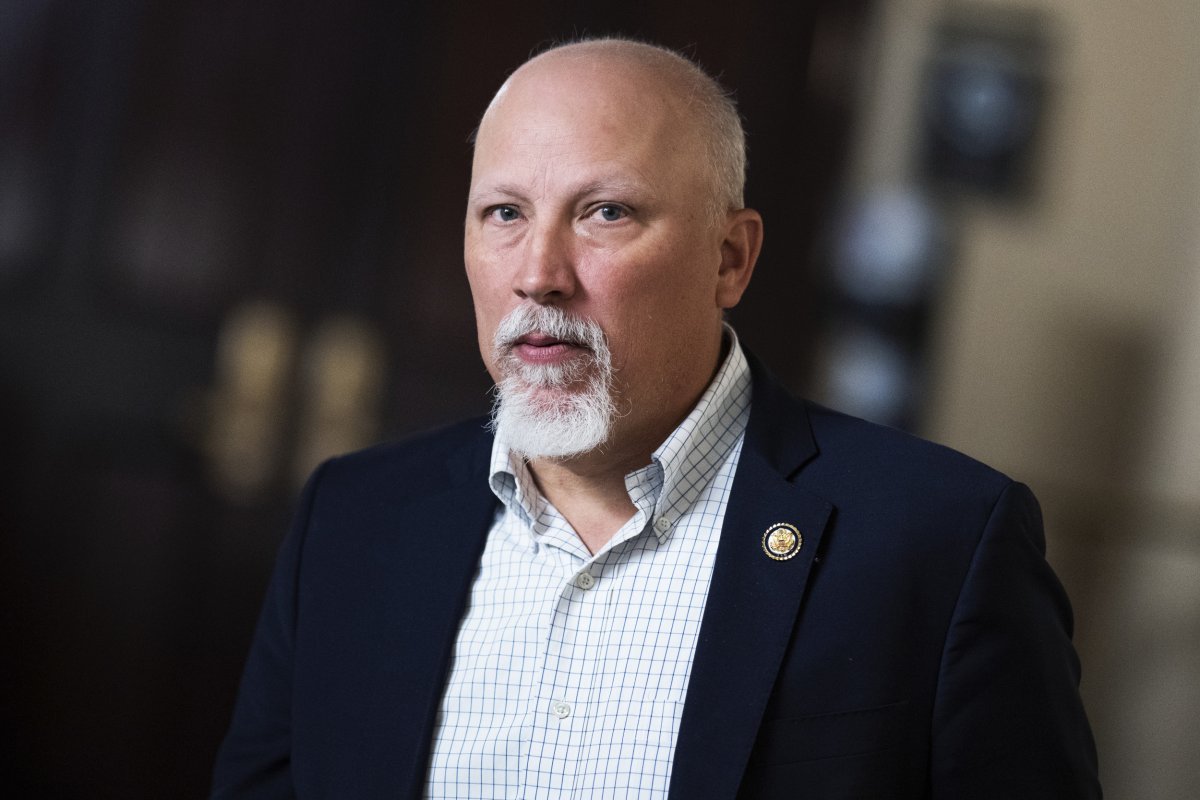
Rep. Chip Roy, R-Texas, author of the SAVE Act, leaving the House Republican Conference in the U.S. Capitol on Tuesday, April 8, 2025. Rep. Chip Roy, R-Texas, author of the SAVE Act, leaving the House Republican Conference in the U.S. Capitol on Tuesday, April 8, 2025. Tom Williams/CQ Roll Call via AP Images
Will the SAVE Act stop married women from voting?
Not directly. However, it will make it harder for the 69 million married women whose names do not match their birth certificates to register to vote in the first place.
Married women can bring their passports instead, but more than 146 million Americans do not have a passport, and may not have $130 spare to purchase one. Passports also take time to be delivered, which many people may not have if they are registering to vote close to their state’s deadline.
The bill says that states will have the freedom to figure out their own parameters for the SAVE Act, however, it does not appropriate funds for this.
Democratic Congresswoman Maxine Dexter brought forward an amendment to the bill which would put a pause on the SAVE Act until they could study and conclusively say that it would not impede married women’s ability to register to vote. This amendment was blocked by Republicans.
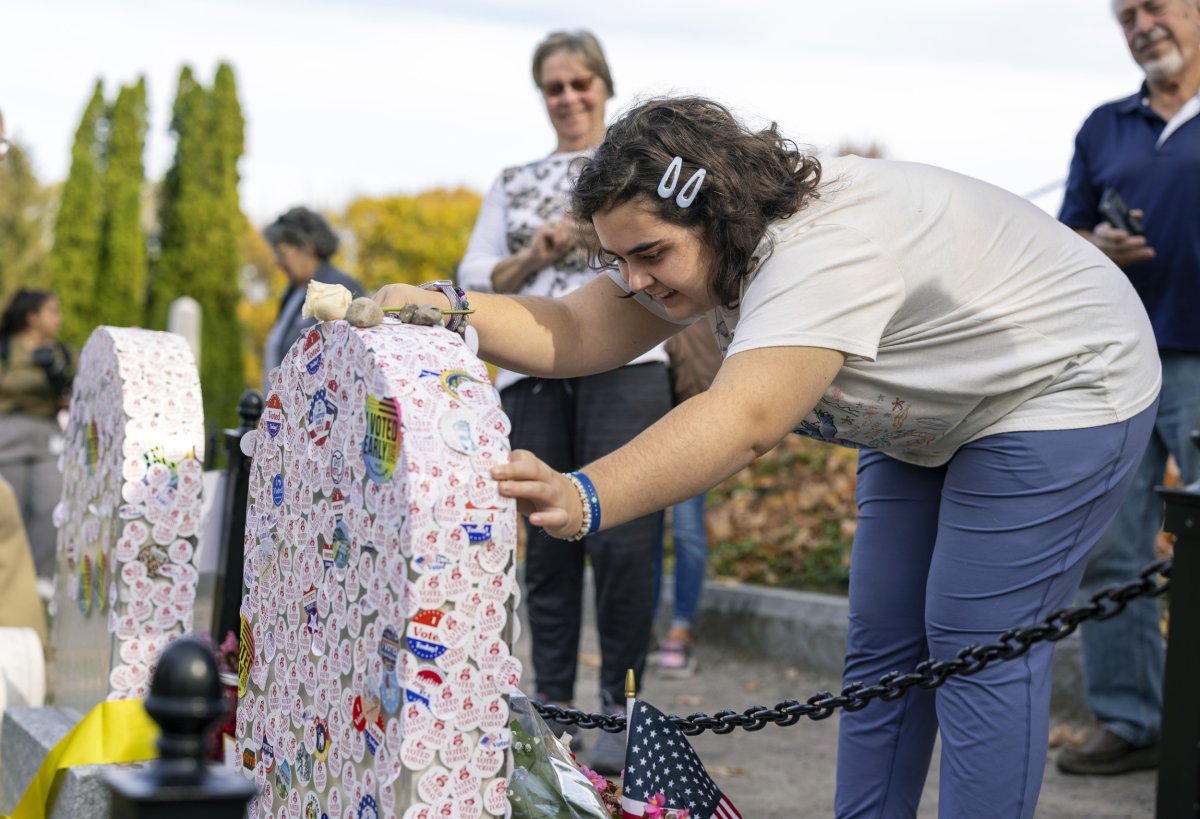
Lydia Mattia, 19, leaving her “I voted” sticker on the headstone of Susan B. Anthony at Mount Hope Cemetery in Rochester, N.Y. on Election Day, Tuesday, Nov. 5, 2024. Lydia Mattia, 19, leaving her “I voted” sticker on the headstone of Susan B. Anthony at Mount Hope Cemetery in Rochester, N.Y. on Election Day, Tuesday, Nov. 5, 2024. Lauren Petracca/AP Photo
Will the SAVE Act eliminate online or mail voter registration?
Yes. The SAVE Act’s documentary proof of citizenship at the time of registration requirement, has to be verified by poll workers in person.
This eliminates people’s ability to register through any other means, making voter registration exceedingly difficult for disabled people, the elderly, college students, troops deployed overseas, rural voters, and anybody who does not have the time to line up in person to register.
Voter registration group When We All Vote told Newsweek: “Registering voters online and in person is at the core of When We All Vote’s work increasing participation in every election and closing the race and age voting gaps.
“Registering to vote can be overwhelming, and we provide voters with the resources and tools they need to get registered and ready to make their voices heard.
“Last year, When We All Vote helped more than 300,000 Americans register or check their voter registration. The SAVE Act would eliminate this work, and make registering to vote a daunting task.”
How will people without passports or birth certificates register to vote?
They may not be able to unless they have some other form of citizenship proof such as a naturalization certificate, people who cannot prove their citizenship with a passport or birth certificate will not be able to register to vote under the SAVE Act.
Apart from the 146 million Americans who do not have a passport, 21.3 million Americans cannot locate their birth certificate or other citizenship paperwork, according to the Brennan Center for Justice.
People who are already registered may also be impacted by the SAVE Act, as the act calls for frequent voter-roll purges. These purges tend to accidentally remove U.S. citizens as well, meaning they will have to reregister under the SAVE Act parameters. Any citizens who move house will also have to reregister in their area.
The SAVE Act’s in-person documentary voter registration requirement will make it harder for married women, and many other groups, to register to vote. The SAVE Act’s in-person documentary voter registration requirement will make it harder for married women, and many other groups, to register to vote. Getty/Newsweek
Will the SAVE Act make it harder for low income or rural voters to register?
Yes. Rural voters will have to drive to their nearest voter registration location to register to vote. This will be especially hard for rural voters with families and/or full-time jobs who do not have hours to spare for driving and lining up to register.
Low-income voters are less likely to have a passport, meaning they will have to locate their birth certificate and another form of ID in order to register to vote. If they have lost those documents they will have to pay to replace them.
Equal Ground Action Fund Executive Director Genesis Robinson told Newsweek that forcing people to pay for documents equates to a poll tax.
Could the SAVE Act disproportionately affect people of color?
Yes. Older Black Americans are less likely to have a birth certificate because they were denied hospital births during segregation.
Many Tribal IDs do not list citizenship, creating an impediment for Native voters, who already have difficulties voting as reservation addresses are not as easy to list on voter registration forms. Black and Latin Americans are also more likely to be physically impacted by natural disasters, meaning they are more likely to lose their citizenship documentation due to a disaster, and will have to move more often, meaning they will have to reregister to vote under SAVE Act parameters.
NAACP President Derrick Johnson said in a statement to Newsweek: “The SAVE Act is nothing more than voter suppression disguised as voter protection. The burdensome requirements disproportionately target voters in historically marginalized communities, amplify systemic inequalities, and aim to silence millions.”

Speaker of the House Mike Johnson, R-La., talks with the media in the U.S. Capitol after the House passed the budget resolution on Thursday, April 10, 2025. Speaker of the House Mike Johnson, R-La., talks with the media in the U.S. Capitol after the House passed the budget resolution on Thursday, April 10, 2025. Tom Williams/CQ Roll Call via AP Images
Does the SAVE Act violate federal voting laws?
This is under debate. The National Voter Registration Act (NVRA) of 1993, allows voters to affirm citizenship via signed declaration, not documentary proof. However, The SAVE Act is written to amend the NVRA, meaning if passed it would supersede the original law.
Similar laws requiring proof of citizenship to vote and frequent voter roll purges in Arizona were struck down by the 9th U.S. Circuit Court of Appeals who said those laws were a Civil Rights violation.
There is a chance the SAVE Act would also face similar judicial review. However, the Supreme Court‘s Shelby vs Holder decision in 2013 rolled back certain protections in the Voting Rights Act, meaning they may rule that the SAVE Act is legal.
Will transgender individuals be blocked from voting if their IDs don’t match?
They will almost certainly have more difficulty registering to vote. Transgender individuals who have changed their name on their ID will not have a name or gender that matches their birth certificate.
If transgender people want to use their passports instead, the Trump administration has also required all people to list their gender assigned at birth on their passports, which may cause confusion among poll workers when registering transgender people to vote, as their appearance and gender may not match the gender noted on their passport.

